Примеры вопросов и ответов:
What traditional obento consists of? — The traditional obento consists of rice balls, pieces of fried or grilled meat or fish, pieces of pickled, boiled or steamed vegetables and a piece of fruit.
Из чего состоит традиционное обенто? — Из рисовых шариков, кусочков жареного мяса или рыбы, кусочков маринованных, варёных или приготовленных на пару овощей и кусочка фрукта.
Who usually prepares obento for little kids? — Child’s mother usually prepares an obento.
Кто обычно готовит обенто для малышей? — Обычно его готовит мама ребёнка.
Where can the Japanese get their obento from? — Japanese can buy obentos almost everywhere, even at theatres, airports and train stations. They can get obentos from home as well.
Где японцы берут обенто? — Его можно купить почти везде, даже в театрах, аэропортах и на вокзалах. А ещё его берут из дома.
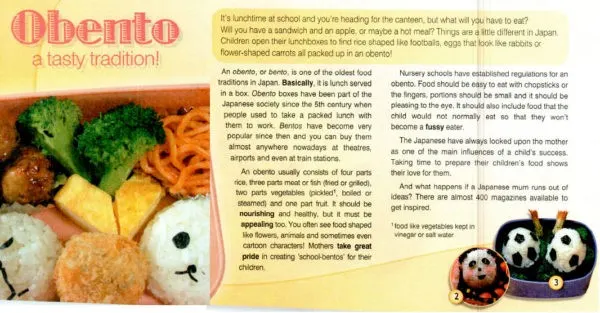
It’s lunchtime at school and you’re heading for the canteen, but what will you have to eat? Will you have a sandwich and an apple, or maybe a hot meal? Things are a little different in Japan. Children open their lunchboxes to find rice shaped like footballs, eggs that look like rabbits or flower-shaped carrots all packed up in an obento!
An obento, or bento, is one of the oldest food traditions in Japan. Basically, it is lunch served in a box. Obento boxes have been part of the Japanese society since the 5th century when people used to take a packed lunch with them to work. Bentos have become very popular since then and you can buy them almost anywhere nowadays at theatres, airports and even at train stations.
An obento usually consists of four parts rice, three parts meat or fish (fried or grilled), two parts vegetables (pickled, boiled or steamed) and one part fruit. It should be nourishing and healthy, but it must be appealing too. You often see food shaped like flowers, animals and sometimes even cartoon characters! Mothers take great pride in creating «school-bentos» for their children.
Nursery schools have established regulations for an obento. Food should be easy to eat with chopsticks or the fingers, portions should be small and it should be pleasing to the eye. It should also include food that the children would not normally eat so that they won’t become a fussy eater.
The Japanese have always looked upon the mother as one of the main influences of a child’s success. Taking time to prepare their children’s food shows their love for them.
And what happens if a Japanese mum runs out of ideas? There are almost 400 magazines available to help them get inspired.
В школе наступает обеденное время, вы идёте в столовую, но что вы там съедите? Бутерброд с яблоком или, может, горячее блюдо? В Японии всё немного иначе. Дети открывают ланчбоксы и находят там рис в виде футбольных мячей, яйца, похожие на кроликов, или морковь в форме цветов — всё это уложено в обенто!
Обенто, или бенто, — одна из самых древних пищевых традиций Японии. По сути, это обед в коробке. Коробки для обенто известны в японском обществе с V века, когда люди брали с собой на работу обед. С тех пор бенто стали очень популярны, и сегодня их можно купить почти где угодно: в театрах, аэропортах и даже на вокзалах.
Обычно в обенто четыре части риса, три части мяса или рыбы (жареных или на гриле), две части овощей (маринованных, варёных или на пару) и одна часть фруктов. Еда должна быть питательной и полезной, но ещё и привлекательной. Часто её делают в виде цветов, животных, а иногда и героев мультфильмов! Мамы очень гордятся тем, что готовят школьные бенто для детей.
В детских садах есть свои правила для обенто. Еду должно быть легко брать палочками или руками, порции должны быть маленькими, а выглядеть всё должно красиво. Ещё в нём должна быть еда, которую дети обычно не едят, чтобы они не выросли привередливыми.
Японцы всегда считали, что мама сильно влияет на успех ребёнка. Время, которое она тратит на приготовление еды, показывает её любовь.
А что, если у японской мамы кончились идеи? Ей помогут почти 400 журналов, которые подскажут, что приготовить.